California Sales Tax Changes for SaaS and Software: What Businesses Should Know
Practical guidance to help finance teams simplify sales tax compliance and reduce operational risk.
Updated October 2026
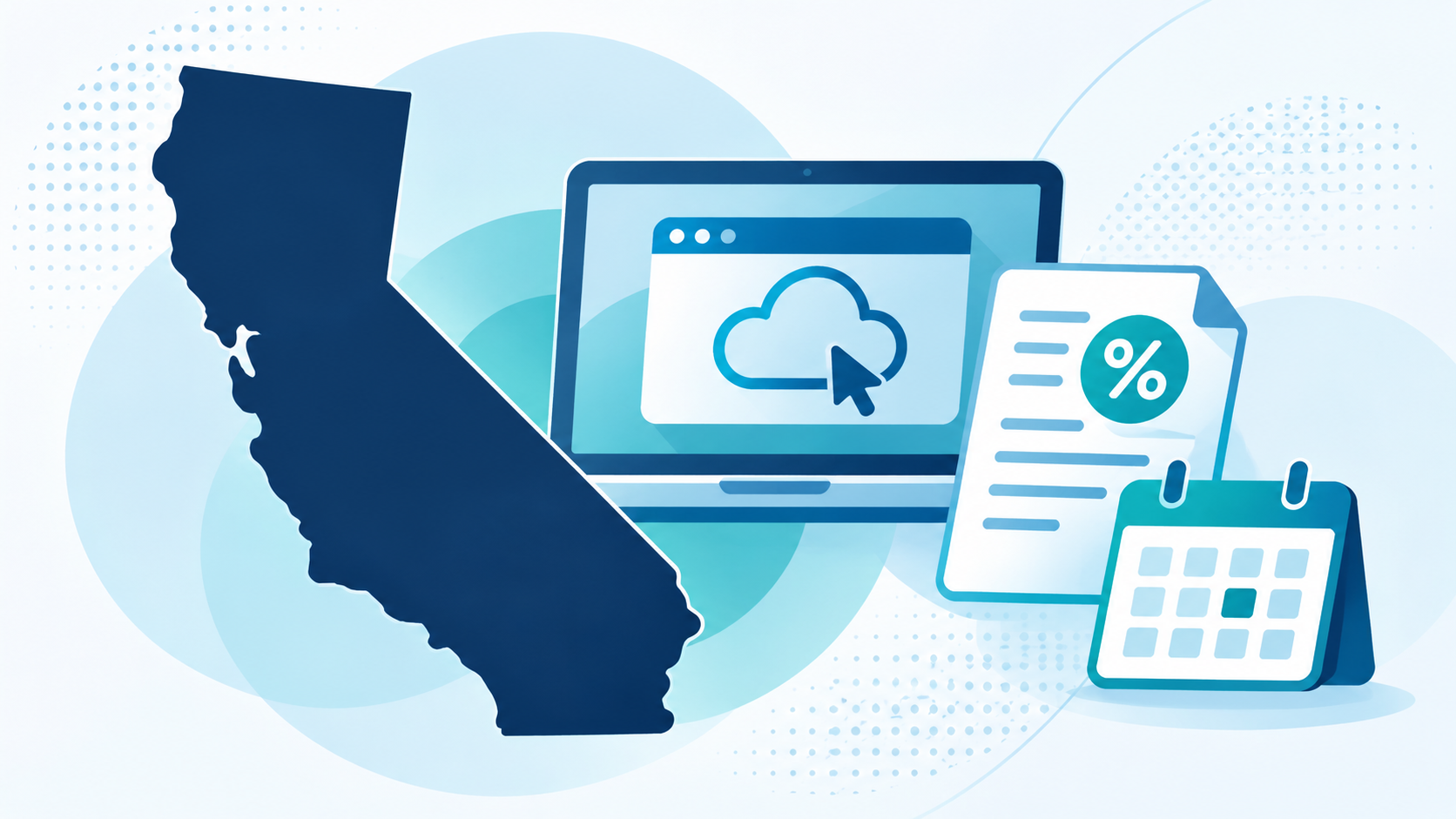
California’s upcoming sales tax changes for Software as a Service (SaaS) and certain electronically delivered software are getting closer.
Beginning January 1, 2027, California will expand its sales and use tax rules to include many software transactions that were previously not subject to tax.
The changes, introduced through Senate Bill 122 (SB 122), represent a significant shift in how California treats software for sales tax purposes.
With the effective date approaching and additional implementation guidance now available, businesses that sell, purchase, or rely on software should review their sales tax processes before the new requirements take effect.
What Changed?
Historically, California has treated many digital products and remotely accessed software differently than tangible personal property for sales tax purposes.
Under California SB 122, the state is expanding sales and use tax rules for certain digital products, including software transactions that are transferred electronically or accessed remotely.
The legislation represents one of the most significant changes to California’s sales tax treatment of software in recent years.
When Does the Change Take Effect?
The new law is scheduled to become effective on January 1, 2027.
While businesses are not immediately required to make changes, the additional lead time provides an opportunity to review products, customers, and sales tax processes before the new rules become effective.
What is the latest guidance from California?
Since SB 122 was signed into law in June 2026, the California Department of Tax and Fee Administration (CDTFA) has been working to clarify how the new requirements will be implemented.
On September 1, 2026, CDTFA released draft regulatory language, followed by an interested parties meeting on September 10.
The proposed regulations address several areas that may affect businesses selling or purchasing software, including:
- How taxable digital products are defined and classified
- Treatment of custom computer software
- Software purchased for use across multiple states
- How customer locations affect sales tax sourcing
- Certain exemptions and exclusions
- Purchaser responsibilities, including direct payment requirements
These proposals offer additional insight into California’s intended approach, but they have not been finalized and remain subject to change.
For businesses with recurring subscriptions, customers in multiple locations, or a combination of software and services, these details are particularly important.
Businesses should continue monitoring official guidance as January 1, 2027 approaches.
For current information, visit the CDTFA Tax Guide for Retailers and Purchasers of Digital Products.
Who Should Pay Attention?
- Software companies selling into California
- SaaS providers
- Finance and accounting teams
- Tax professionals
- Businesses purchasing software for internal use
Organizations with customers in California should evaluate how the new rules may affect their sales tax obligations.
Why This Matters
California’s legislation is another reminder that sales tax compliance is not static.
States continue to update tax laws as technology, commerce, and customer purchasing habits evolve.
For businesses operating in multiple states, staying current with these changes is just as important as calculating the correct sales tax rate.
How businesses can prepare before January 1, 2027
With the new requirements approaching, businesses should evaluate how California’s expanded sales tax rules may affect their existing processes.
1. Review affected products and services.
Identify software products, SaaS subscriptions, and digital offerings that may become taxable under California’s expanded rules.
2. Evaluate California customer transactions.
Review customer locations, California sales activity, and existing sales tax collection obligations. Companies with customers using software across multiple states may need to evaluate additional sourcing considerations.
3. Check current taxability settings.
Determine whether your existing sales tax calculation process can accommodate changes to software taxability beginning in 2027.
4. Review billing and ERP connections.
Evaluate how sales tax decisions flow through your ERP, ecommerce platform, accounting software, or subscription billing system.
5. Review contracts and recurring subscriptions.
Consider how agreements, renewals, and subscription billing periods extending into 2027 may be affected by the new requirements.
6. Monitor California’s implementation guidance.
Continue following CDTFA updates and discuss questions about specific transactions, exemptions, or reporting obligations with your internal tax team or qualified tax advisor.
Preparing now gives finance and tax teams time to evaluate their processes and identify potential gaps before the changes take effect. becomes available, businesses should continue reviewing how the law applies to their specific products and transactions.
Sales Tax Rules Continue to Evolve
California’s upcoming changes are another reminder that sales tax requirements continue to evolve.
For businesses operating across multiple states, maintaining current taxability settings and consistent calculation processes is an important part of managing compliance.
Built by tax experts, with tax expertise embedded directly into the software, AkuCalc helps businesses manage sales tax calculations within their existing workflows.
Explore AkuCalc Sales Tax Calculation to learn more.
This article is for general informational purposes and does not constitute tax or legal advice. Businesses should consult qualified tax professionals regarding their specific circumstances.
Continue Exploring
-
AkuCalc Named a 2026 SaaS Awards Finalist Across Five Categories
AkuCalc has been named a 2026 SaaS Awards Finalist across five categories, recognizing innovation in sales tax automation and our commitment to helping finance teams simplify compliance with confidence.
-
Why Missing Exemption Certificates Create Audit Risk
Missing exemption certificates can create sales tax audit risk when a business cannot prove why tax was not charged. Learn how certificates go missing, what happens during an audit, and how better exemption certificate management helps manufacturers, distributors, wholesalers, contractors, dealers, retailers, and resale-based businesses build a cleaner process before an audit begins.
-
Sales Tax Software for Multi-State Businesses: What You Need to Know
Multi-state sales tax problems often start with ordinary growth decisions, such as opening a warehouse, expanding into new states, adding sales channels, or crossing nexus thresholds. Learn what manufacturers, distributors, and wholesalers need from sales tax software to manage rates, exemption certificates, ERP integrations, and audit risk with more confidence.
- « Previous
- 1
- 2
- 3
- 4
- Next »