
Shopify Automated Filing Is Ending: What Merchants Need to Know Before 2027
Practical guidance to help finance teams simplify sales tax compliance and reduce operational risk.
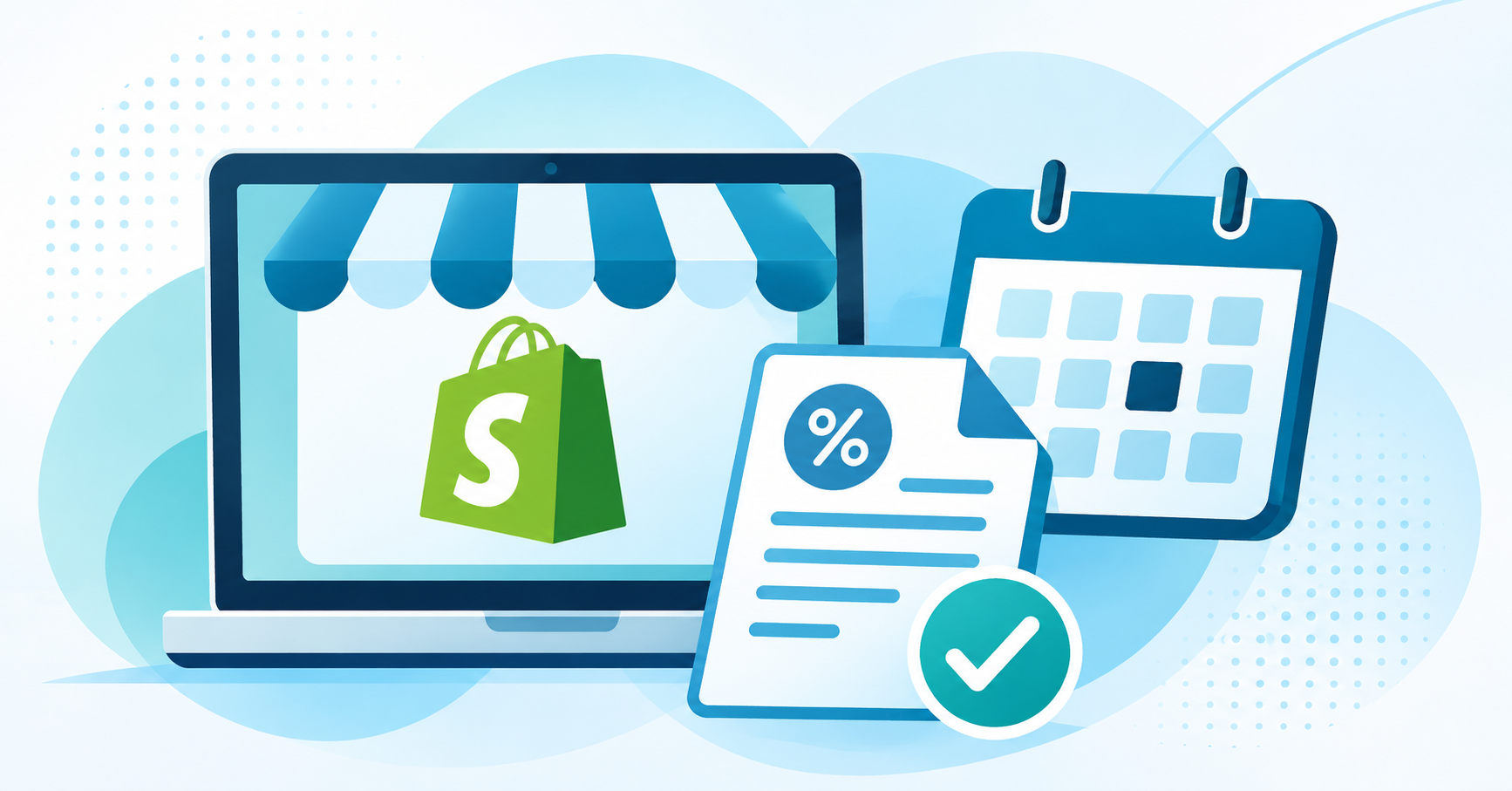
Shopify Automated Filing is ending, and businesses currently using the service have an important sales tax transition ahead.
Businesses currently using Shopify Tax Automated Filing have an important sales tax transition ahead.
Shopify has announced that its Automated Filing service is ending after the final returns covering sales through December 31, 2026.
But there is an important distinction:
Shopify Tax is not going away.
Shopify will continue calculating sales tax and keeping tax reports current. What is changing is the service that prepares and files sales tax returns on behalf of participating merchants.
For businesses that currently depend on Automated Filing, that means 2027 will require a new filing process.
Here is what merchants should understand and begin preparing for now.
What does it mean that Shopify Automated Filing is ending?
Shopify is ending Automated Filing with Shopify Tax.
For enrolled businesses, Automated Filing currently uses Shopify store data to prepare and file monthly, quarterly, semiannual, and annual U.S. sales tax returns.
After the final automated return, businesses will need to either:
- File their sales tax returns themselves, or
- Work with another sales tax filing provider.
Shopify Tax itself will continue to calculate sales tax and maintain tax reports.
In other words:
The calculation capability continues. The automated filing service does not.
When will Shopify file the last return?
The answer depends on each business’s filing frequency and state requirements.
In general, Shopify Automated Filing will cover sales through December 31, 2026.
For example:
- Monthly filers will generally have their December 2026 return filed in January 2027.
- Quarterly filers will generally have their October through December 2026 return filed in January 2027.
- Annual filers will generally have their 2026 return filed in January 2027.
- New York quarterly filers are an exception. Shopify indicates that the December 2026 through February 2027 quarterly return will still be handled through Automated Filing.
Businesses should confirm the final automated return for every state where they currently file.
What happens after the last Shopify filing?
The next return becomes the business’s responsibility.
That means a merchant needs to know exactly where Shopify stops and the new process begins.
This transition is important because a missed handoff can create two very different problems:
A filing gap: nobody files the next required return.
A duplicate filing: Shopify files a return and the new provider files the same period again.
Before changing providers, document the last return Shopify will file in each jurisdiction and the first return the new filing process will be responsible for.
Save your Shopify filing history
Businesses should also retain copies of their historical Automated Filing records.
Shopify currently states that merchants can download their filing records through April 30, 2027.
Those records can be valuable when:
- Transitioning to a new filing provider
- Responding to state notices
- Reconciling prior returns
- Reviewing filing frequencies
- Supporting future audits or tax questions
Do not wait until access is gone to decide which records should be retained.
Five things to review before choosing your next filing process
1. Where are you currently registered?
Start with the jurisdictions where your business has active sales tax registrations.
Make sure your list of registrations matches the states where returns are currently being filed.
The transition is also a useful opportunity to identify registrations that may need additional review.
2. How often does each state require you to file?
Not every state follows the same filing schedule.
A business may have monthly, quarterly, semiannual, and annual obligations across different jurisdictions.
Your next filing provider needs an accurate filing calendar before taking over.
3. Who will manage deadlines and notices?
Preparing the return is only part of the filing process.
Businesses should understand who will monitor:
- Filing deadlines
- State account access
- Payment requirements
- Notices from taxing authorities
- Changes to filing frequencies
- Questions that arise during preparation
The right filing process should make responsibilities clear.
4. Are all of your sales happening in Shopify?
For many growing businesses, the answer is no.
A company may sell through Shopify while also processing transactions through:
- An ERP
- Another ecommerce platform
- Direct sales
- Marketplaces
- Additional sales channels
Shopify’s Automated Filing has limitations around sales that occur outside supported Shopify channels. A new filing process should account for the full set of data needed to prepare an accurate return.
If your sales activity exists in several systems, understanding how that data comes together becomes an important part of choosing a filing provider.
5. What support do you want when something is not straightforward?
Sales tax filing is rarely just data in, return out.
Questions come up.
A state may change a filing frequency. A registration may need attention. A notice may arrive. Sales data may need clarification. A transaction may not look the way everyone expected.
Businesses should understand what kind of support is included and who they will work with when those situations arise.
What if Shopify is not your only sales channel?
This is where the transition can become more than simply replacing one filing service with another.
If your business uses Shopify alongside an ERP, marketplace, or other ecommerce system, the return may need information from several sources.
That is especially important for businesses operating across multiple states or selling through a mix of direct and marketplace channels.
A strong returns process should consider the complete filing picture rather than looking at one sales channel in isolation.
How Clarus Managed Returns can help
Clarus Managed Returns provides businesses with experienced sales tax professionals supporting the recurring returns process.
Our team works with sales tax data from Shopify and other selling channels to support returns preparation and filing across the appropriate jurisdictions.
That can include:
- Preparing and filing sales tax returns
- Managing recurring filing deadlines
- Working with sales data from multiple channels
- Helping businesses navigate filing questions
- Providing direct access to knowledgeable sales tax professionals
The goal is not simply to replace a button in Shopify.
It is to create a filing process your business can rely on after Automated Filing ends.
Start planning before the first 2027 filing is due
December 31 may sound like there is plenty of time.
But the transition involves more than choosing a provider.
Businesses need to understand their final Shopify filings, preserve historical records, confirm registrations and filing frequencies, provide account access, and make sure their next filing process starts at exactly the right point.
Shopify can keep calculating. Clarus can help keep the filing process moving.
If your business currently relies on Shopify Automated Filing, now is a good time to start the conversation about what comes next.
This article is for general informational purposes only and is not intended as tax or legal advice. Sales tax requirements vary by jurisdiction and individual business circumstances.
Continue Exploring
-
AkuCalc Named a 2026 SaaS Awards Finalist Across Five Categories
AkuCalc has been named a 2026 SaaS Awards Finalist across five categories, recognizing innovation in sales tax automation and our commitment to helping finance teams simplify compliance with confidence.
-
Why Missing Exemption Certificates Create Audit Risk
Missing exemption certificates can create sales tax audit risk when a business cannot prove why tax was not charged. Learn how certificates go missing, what happens during an audit, and how better exemption certificate management helps manufacturers, distributors, wholesalers, contractors, dealers, retailers, and resale-based businesses build a cleaner process before an audit begins.
-
Sales Tax Software for Multi-State Businesses: What You Need to Know
Multi-state sales tax problems often start with ordinary growth decisions, such as opening a warehouse, expanding into new states, adding sales channels, or crossing nexus thresholds. Learn what manufacturers, distributors, and wholesalers need from sales tax software to manage rates, exemption certificates, ERP integrations, and audit risk with more confidence.

- « Previous
- 1
- 2
- 3
- 4
- Next »